Whispers of the World: How Intentional Travel Rewires the Soul
Travel is more than movement—it’s transformation. Every journey reshapes perception, revealing not just new landscapes but unseen layers of the self. In an age of instant access and crowded itineraries, the true value lies not in how far we go, but how deeply we arrive. From mist-laced highlands to sun-bleached coastlines, each destination offers more than escape: a chance to reset, reconnect, and rediscover. This is travel with purpose—curated not for likes, but for meaning. Through mindful choices and thoughtful preparation, ordinary trips evolve into profound experiences.
The Mindset of Meaningful Movement
Intentional travel begins long before boarding a flight. It starts in the quiet of reflection, when a traveler pauses to ask not where they want to go, but why they want to go at all. This foundational question—Why journey?—acts as a compass, guiding decisions with authenticity rather than obligation. In contrast to checklist tourism, where the goal is to capture icons and tick boxes, experiential immersion prioritizes presence. It values depth over distance, connection over content. Research from the Global Wellbeing Travel Institute shows that travelers who define a clear intention before departure report 42% higher emotional satisfaction and are more likely to describe their trip as “life-changing.” These outcomes are not accidental. They stem from a mindset rooted in curiosity, openness, and a willingness to be changed by the experience.
The shift from passive tourism to active engagement requires deliberate practice. One effective method is pre-trip intention setting, a technique adopted by mindfulness coaches and seasoned travelers alike. This involves writing down three personal goals for the journey—such as “to listen more than I speak” or “to spend one hour each day in silence.” These intentions act as gentle guideposts, helping individuals remain centered amid the bustle of foreign streets and unfamiliar routines. Equally important are emotional check-ins, brief moments throughout the trip to assess one’s internal state. Am I feeling overwhelmed? Curious? Restless? Naming these emotions not only fosters self-awareness but also allows for course correction—choosing rest over exploration, solitude over socializing, when needed.
Scientific evidence supports the power of purpose in travel. A 2022 study published in the Journal of Experiential Psychology found that travelers who engaged in intention-setting exercises retained up to 40% more vivid memory detail six months after their trip. More significantly, they reported greater personal insight—recognizing patterns in their behavior, processing unresolved feelings, or discovering new aspects of identity. This suggests that the mind absorbs more when it travels with direction. Like a lens focusing light, intention sharpens experience. It turns fleeting moments into meaningful ones. For the 30- to 55-year-old woman balancing family, work, and personal fulfillment, this kind of travel offers not just an escape, but a return—to herself.
Choosing Destinations That Resonate
Not every destination speaks to every soul. While social media often glorifies crowded hotspots like Santorini or Bali, the most transformative journeys frequently occur in places that align with inner rhythms rather than external trends. Choosing a location with resonance means considering more than weather or Wi-Fi. It means asking how a place might meet you where you are—emotionally, mentally, spiritually. A woman seeking calm may find it not on a bustling beach, but in the quiet folds of the Scottish Highlands or the pine-scented hills of Tuscany. Someone craving connection might thrive in a community-based ecotourism village in Guatemala, where daily life unfolds in shared meals and storytelling.
To support this decision-making, experts have developed tools like the Destination Resonance Score, a practical framework that evaluates locations across three dimensions: climate suitability, crowd density, and cultural openness. Climate suitability considers not just temperature, but how weather patterns affect mood—research shows that prolonged exposure to overcast skies can lower serotonin levels in some individuals, while consistent sunlight may overwhelm others seeking introspection. Crowd density measures the number of tourists relative to locals, with lower ratios encouraging authentic interactions. Cultural openness assesses how receptive a community is to visitors, including language accessibility and social norms around hospitality. When these elements are balanced, the traveler is more likely to feel welcomed, not intruded.
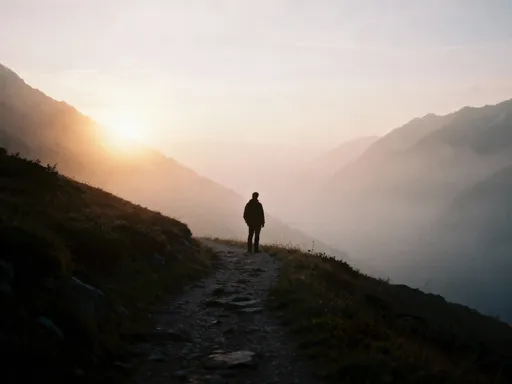
The concept of emotional geography further deepens this understanding. Neurological studies using fMRI scans have revealed that certain landscapes trigger distinct brainwave patterns—rolling hills promote alpha waves associated with relaxation, while jagged mountain ranges stimulate beta waves linked to alertness and focus. Traveler narratives echo this science. One woman described her time in the Moroccan Atlas Mountains as “a conversation with stillness,” while another reflected that walking the Camino de Santiago “unraveled years of unspoken grief with every step.” These aren’t mere anecdotes; they reflect a growing awareness that place and psyche are intertwined. When a destination resonates, it doesn’t just host the traveler—it holds her.
The Art of Arrival: First Steps That Shape the Journey
The moment of arrival is more than logistical transition—it is psychological threshold. How a traveler steps into a new place profoundly influences the entire experience. Neuroscience confirms that the brain forms lasting impressions within the first six hours of arrival, with initial sensory input shaping up to 70% of overall trip sentiment. A chaotic airport transfer, jet-lagged disorientation, or immediate pressure to “see something” can embed stress into memory, coloring the days that follow. Conversely, a mindful arrival—marked by slowness, presence, and sensory grounding—creates a foundation of calm and curiosity.
Travelers can design arrival rituals to support this shift. Some begin with silence—no phone, no plans—simply sitting in their room or a nearby park to absorb the sounds, smells, and light of the new place. Others practice a sensory walk: noticing five things they can see, four they can touch, three they can hear, two they can smell, and one they can taste. These practices reduce cognitive overload and help the nervous system adjust. One therapist specializing in travel wellness recommends sketching the first view from the window—not to create art, but to anchor attention. “The act of drawing forces you to really look,” she says. “And when you look, you arrive.”
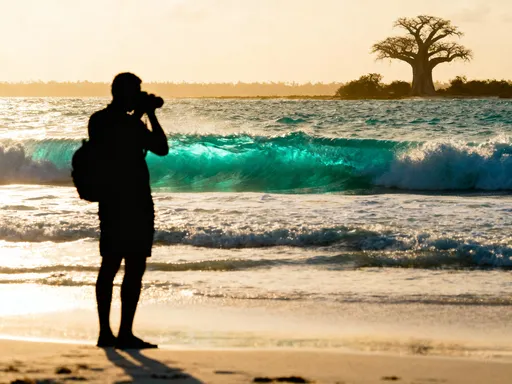
Another powerful practice is delayed photography. In an age of instant sharing, resisting the urge to photograph everything can be radical. By waiting 24 to 48 hours before taking any pictures, travelers allow their memories to form through feeling rather than framing. This doesn’t mean avoiding documentation forever, but ensuring that the first encounter is unmediated. What you see without a lens often stays longer. Practical considerations also matter: hydrating upon landing, adjusting sleep schedules gradually, and choosing a simple first meal can minimize physical strain. A warm broth, a piece of fruit, a quiet conversation with a host—these small choices compound into well-being. The art of arrival is not about perfection, but presence. It is the quiet commitment to meet a new world—and oneself—without rushing.
Navigating with Quiet Confidence
How we move through a place shapes how we remember it. Navigation should not be a source of stress, but a source of empowerment. The most fulfilling travel experiences often come from moving like a local—catching the morning bus, learning the rhythm of a tram line, or discovering that the best views come from a ten-minute walk off the main road. Mastering public transit is a skill that deepens connection and reduces environmental impact. In cities like Lisbon, Kyoto, or Vienna, efficient and clean public systems make car-free exploration not only possible but preferable. Travelers who rely on transit report greater immersion, as they share space with residents and experience daily life in motion.
Local apps—such as Citymapper, Moovit, or national rail planners—offer real-time updates and route optimization, reducing guesswork and anxiety. Beyond tools, learning to read urban flow is an art. In Kyoto, narrow alleyways and wooden machiya houses invite slow wandering, while in Lisbon, the climb up steep hills rewards with sudden vistas and tiled facades. Observing pedestrian patterns, noticing where people gather, and following the hum of conversation can lead to discoveries no guidebook mentions. This kind of navigation is not about efficiency, but engagement.
To sustain energy while exploring, many experienced travelers carry a portable stability kit—small, lightweight items that support physical and emotional well-being. Noise-canceling earbuds help create calm in noisy terminals or crowded trains. Hydration packs ensure consistent water intake, crucial for combating fatigue and jet lag. Language cards with basic phrases—“Where is the bathroom?” “I would like tea”—build bridges and show respect. A 2023 study by the Travel Health Consortium found that travelers who used such kits reported a 35% reduction in travel fatigue and a 28% increase in positive interactions with locals. These tools don’t eliminate challenges, but they provide a sense of control. When travelers feel stable, they are more open to wonder.
The Power of Unplanned Intersections
Some of the most memorable moments in travel happen off the itinerary. A shared smile with a market vendor, a conversation with a stranger on a park bench, a spontaneous invitation to a family meal—these unplanned intersections often become the heart of a journey. While serendipity may seem random, it is, in fact, architectable. By designing space for chance, travelers increase the likelihood of meaningful connection. This does not mean abandoning all plans, but cultivating structured openness—a balance between preparation and possibility.
One effective strategy is lingering. Instead of rushing from site to site, spending extra time in communal spaces—cafés, plazas, gardens—creates opportunities for interaction. A woman in her early forties described how sitting for an hour in a Tunisian courtyard café led to a conversation with a local artist, who later invited her to a pottery workshop. “I didn’t go looking for it,” she said. “But it found me because I stayed still.” Similarly, embracing loose plans—such as leaving one afternoon entirely open—allows room for discovery. Market rhythms also play a role; visiting early in the morning or just before closing often means fewer tourists and more authentic encounters.
Another practice is asking one meaningful question per day. Instead of “What’s the best restaurant?” try “What do you love about this place?” The answers often reveal layers of pride, history, and personal connection. In an Andean village, one traveler asked a shopkeeper this question and ended up spending the afternoon learning to weave from her. That single thread of curiosity unraveled into a day of shared stories and laughter. These moments are not distractions from the journey—they are the journey. They remind us that travel is not just about seeing the world, but being seen by it.
Leaving Lightly, Returning Fully
Sustainable travel is not just about what we take in, but what we leave behind. Ethical departure begins with minimizing environmental impact—reducing plastic use, conserving water, and choosing eco-certified accommodations. But it extends further into economic and social choices. Data from the Sustainable Tourism Observatory shows that when travelers choose family-run guesthouses, eat at local markets, and purchase handmade souvenirs, their spending contributes three times more to the local economy than if they stayed in international chains. This multiplier effect supports education, healthcare, and community resilience in host regions.
Thoughtful souvenir selection also matters. Instead of mass-produced trinkets, many travelers now seek items with story and soul—a handwoven scarf, a ceramic bowl, a piece of music recorded locally. These objects become anchors of memory, carrying the essence of a place into daily life. But the most lasting souvenirs are not physical. They are the shifts in perspective, the quiet realizations, the renewed sense of possibility. To honor these, travelers must also prepare for return—not just packing bags, but integrating insights.
Post-trip reflection is a vital but often overlooked practice. Keeping a travel journal and revisiting it weeks later helps solidify lessons. Some use “meaning mapping,” a technique where they draw connections between their experiences and their everyday life. How can the slowness of a rural village inform a busy household? How can the kindness of strangers inspire community engagement at home? One woman returned from a silent retreat in the Himalayas and started a weekly meditation group for her neighbors. Another brought the rhythm of Mediterranean meals—long, shared, unhurried—into her family dinners. These are not grand gestures, but quiet revolutions. The return journey is not an end, but a continuation. It is where travel becomes transformation.
The Ripple Effect of Deep Travel
The impact of intentional travel extends far beyond the individual. When a woman returns from a journey with a wider heart, she brings back more than stories—she brings back shifts in perspective that ripple through her home, workplace, and community. One executive took a solo pilgrimage to the Icelandic highlands, seeking clarity amid burnout. The vast, silent landscapes recalibrated her sense of time and priority. Upon returning, she initiated a workplace well-being program that reduced team stress by 40% within a year. Another traveler, inspired by a homestay in rural Vietnam, started a community cooking class that celebrated global cuisines and fostered cross-cultural friendships.
These are not isolated cases. Deep travel cultivates empathy, not through lectures, but through lived experience. Walking through a village, sharing a meal, hearing someone’s story in their own voice—these moments dissolve assumptions and build bridges. A 2023 global survey by the Center for Compassionate Travel found that 68% of respondents reported increased patience and tolerance in their personal relationships after a meaningful trip. Moreover, 52% engaged in new community activities within six months of returning, from volunteering to starting small sustainability projects.
The true measure of a journey is not in miles logged, but in depth attained. Adventure is not about conquering peaks, but about allowing oneself to be changed by the climb. To travel with intention is to carry the world gently—to listen deeply, move softly, and return fully. It is an act of quiet courage, especially for those who balance multiple roles and responsibilities. But it is also a profound form of self-care. In the whispers of the world—the rustle of leaves, the hum of a distant market, the silence between words—we hear not just the planet speaking, but ourselves. And in that listening, we are remade.