You Won’t Believe What Almaty’s Culture Scene Is Hiding
Almaty isn’t just mountains and apple forests—its cultural heartbeat is real, raw, and totally unexpected. I wandered into traditional music nights, stumbled upon underground art collectives, and shared tea with local historians who spilled stories you won’t find in guidebooks. This city blends Soviet echoes, Kazakh heritage, and modern creativity in ways that surprised me at every corner. If you're chasing authenticity, not just checkmarks, Almaty’s cultural experiences will rewire your idea of Central Asia.
First Impressions: Beyond the Mountains
When travelers think of Almaty, their minds often drift to snow-capped peaks, alpine trails, and the legendary Ile-Alatau National Park. Yet beyond the postcard-perfect landscapes lies a city pulsing with cultural complexity. As Kazakhstan’s former capital and its largest urban center, Almaty has long served as a crossroads of identities, languages, and histories. The city's streets echo with Russian, Kazakh, and Uyghur voices, while its architecture tells a layered story—from ornate wooden churches to Soviet-era concrete blocks and sleek modern towers. This blend isn’t accidental; it’s the result of centuries of migration, empire, and reinvention.
What sets Almaty apart from other post-Soviet cities is its dynamic relationship with tradition. Unlike places where heritage is preserved behind glass or performed for tourists, Almaty’s culture is lived. It thrives in everyday rituals: the way elders greet each other with a hand-over-heart gesture, the aroma of freshly baked baursaks drifting from neighborhood kitchens, or the impromptu dombra tunes played on park benches. The city doesn’t just remember its past—it reinterprets it, allowing young artists, musicians, and designers to draw from deep roots while pushing creative boundaries.
Arriving in Almaty, one immediately senses this duality. The airport’s sleek glass façade gives way to a city that feels both orderly and organic. Tree-lined avenues like Nazarbayev Street and Panfilov Street offer a glimpse into the city’s planned elegance, while side alleys reveal hidden courtyards where grandmothers hang laundry and children kick soccer balls between Soviet-era apartment blocks. This contrast isn’t a flaw—it’s the essence of Almaty’s charm. For the culturally curious traveler, especially those who value authenticity over spectacle, the city offers a rare opportunity: to witness a living culture in motion, not frozen in time.
The Soul of Kazakh Heritage: Museums with a Story
Almaty’s museums are far more than repositories of artifacts—they are vibrant storytellers, weaving together ancient traditions, national identity, and artistic expression. At the heart of this cultural landscape stands the Central State Museum of the Republic of Kazakhstan, a monumental building adorned with striking Soviet mosaics depicting agricultural abundance and heroic labor. Inside, visitors encounter a sweeping narrative of the nation’s past, from the nomadic Saka tribes who roamed the steppes over two millennia ago to the complex legacy of Soviet rule. The museum’s crown jewel is its collection of Saka gold—elaborately crafted jewelry, weapons, and ceremonial objects unearthed from burial mounds, each piece a testament to the artistry and spiritual depth of early Central Asian civilizations.
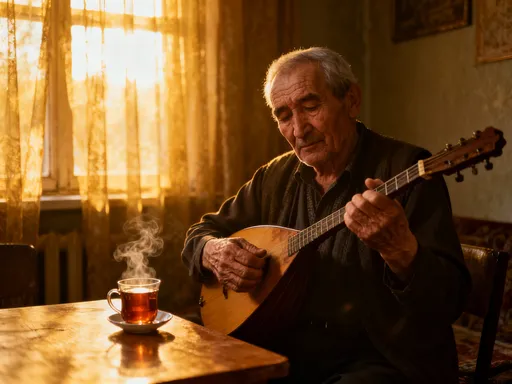
But Almaty’s cultural institutions don’t stop at grand historical narratives. Smaller, more intimate venues offer deeper, more personal connections. The Museum of Folk Musical Instruments, housed in a charming wooden mansion once belonging to composer Kurmangazy Sagyrbayev, is a sanctuary for sound and memory. Here, glass cases display traditional instruments like the dombra (a two-stringed lute), the kobyz (a bowed string instrument with haunting tones), and the sybyzgy (a long flute used in pastoral settings). What makes this museum extraordinary is its commitment to experiential learning: regular live performances allow visitors to hear these instruments played, their melodies echoing through the halls like voices from the past.
Equally compelling are the hands-on workshops offered at select museums, where travelers can try their hand at crafting simple instruments or learning basic dombra chords. These interactive elements transform passive observation into active participation, allowing guests to feel the rhythm of Kazakh music in their own hands. For families and older travelers alike, such experiences provide meaningful engagement without requiring prior knowledge. The museum staff, often fluent in both Kazakh and Russian, welcome questions and share anecdotes about the cultural significance of each instrument, reinforcing the idea that heritage is not static—it’s passed down, adapted, and kept alive through practice.
Where Tradition Lives: Local Markets & Craft Hubs
To truly understand Almaty’s culture, one must step into its markets—places where tradition isn’t staged but lived. The Green Bazaar, or Zelyony Bazaar, is the city’s most iconic marketplace, a bustling sensory experience that has served residents for generations. Here, rows of vendors display pyramids of bright red apples (Almaty’s namesake, from the Kazakh *alma*, meaning “apple”), jars of wild honey, wheels of pungent qurt (dried fermented cheese), and slabs of fresh meat hung with care. But beyond the produce, the market is a living classroom in Kazakh customs. Elderly women in headscarves bargain in rapid-fire Kazakh, exchanging proverbs as naturally as coins, while grandfathers sample kumys—fermented mare’s milk—before deciding on a purchase.
Nearby, the Zhetigen Craft Market offers a more focused celebration of handmade artistry. Named after the traditional Kazakh frame drum, Zhetigen is a cooperative space where artisans gather to create and sell textiles, jewelry, and household goods. Watch as women meticulously hand-stitch shyrdaks, the colorful felt rugs that once adorned yurts. Each geometric pattern carries symbolic meaning—protection, fertility, or ancestral memory—passed down through generations. Visitors are often invited to try their hand at basic felting techniques under patient guidance, making this not just a shopping destination but a participatory cultural exchange.
For travelers seeking authenticity, these markets offer invaluable insights into daily life. To engage respectfully, it’s advisable to visit in the morning when vendors are most open to conversation. A simple greeting in Kazakh—“Salem” (hello)—goes a long way. While photography is generally tolerated, it’s polite to ask permission before capturing portraits. And when tasting food, even small bites signal appreciation. Whether sipping warm kumys or sampling beshbarmak (a hearty meat-and-noodle dish), these moments of shared sustenance foster connection. The markets remind us that culture isn’t found in grand monuments alone—it flourishes in the rhythm of daily routines, in the pride of craftsmanship, and in the warmth of human interaction.
Soviet Echoes & Urban Identity
Almaty does not erase its Soviet past; instead, it reimagines it. Unlike cities that have demolished or ignored their communist-era architecture, Almaty integrates these structures into its evolving identity. Former administrative buildings, once symbols of centralized control, now house independent art galleries, design studios, and experimental theaters. This adaptive reuse reflects a broader cultural attitude: one of selective remembrance, where history is neither glorified nor discarded, but transformed.
A prime example is the Zenko Cinema, a 1970s modernist landmark that has become a focal point in the city’s cultural debates. Once a hub for state-approved films, it now stands at the center of a tug-of-war between preservationists and developers. While some advocate for its restoration as a cultural venue, others push for commercial redevelopment. Yet even in uncertainty, the building inspires creativity. Street artists have turned its surrounding walls into canvases, their murals blending Soviet iconography with contemporary commentary. Nearby, retro-themed cafes serve Soviet-era snacks like pelmeni and compote, attracting young locals who sip tea beneath vintage propaganda posters.
This reinterpretation extends to music and memory. Underground collectives host vinyl nights featuring Soviet pop and jazz, while digital archivists curate online exhibits of personal family photographs from the 1960s to 1980s. These efforts aren’t nostalgic—they’re analytical, offering younger generations a way to understand their grandparents’ lives without romanticizing the past. For visitors, this layered urban landscape invites reflection. Walking through Almaty’s central districts, one sees not a city stuck in time, but one in dialogue with it—where a Brutalist apartment block might host a poetry reading, and a crumbling monument becomes the backdrop for a fashion shoot. This creative tension between preservation and progress is not a contradiction; it’s the pulse of Almaty’s cultural identity.
Festivals That Define the City’s Rhythm
In Almaty, culture isn’t confined to museums or markets—it spills into the streets during festivals that mark the passage of time and the renewal of community. The most significant of these is Nauryz, the Central Asian New Year celebrated on March 21st, which coincides with the spring equinox. Rooted in ancient Zoroastrian traditions, Nauryz is a time of forgiveness, feasting, and renewal. Across the city, parks and public squares come alive with music, dance, and traditional games. Horse races, kokpar (a form of goat polo), and kyz kuu (“girl chase”), a playful equestrian game, draw crowds of all ages.
At the heart of the celebration is nauryz kozhe, a symbolic soup made from seven ingredients representing prosperity, health, and unity. Families gather to prepare it together, often sharing pots with neighbors as a gesture of goodwill. For visitors, attending a Nauryz festival offers a rare window into communal values—hospitality, generosity, and intergenerational connection. While large public events are tourist-friendly, smaller neighborhood celebrations provide even richer experiences. With respectful curiosity and a willingness to participate, travelers may be invited to join a folk dance circle or sample homemade desserts.
Another highlight is the Almaty International Film Festival, held annually in September. Unlike glitzy red-carpet events, this festival emphasizes storytelling from Central Asia, the Caucasus, and the broader post-Soviet region. Local filmmakers present works exploring identity, migration, and social change, often followed by candid Q&A sessions. Screenings take place in repurposed Soviet cultural centers and independent cinemas, reinforcing the city’s blend of old and new. For culturally engaged travelers, especially those interested in narrative and visual arts, the festival offers deep insight into contemporary regional perspectives. By aligning a visit with such events, guests don’t just observe Almaty’s culture—they become part of its rhythm.
Behind Closed Doors: Private Cultural Experiences
Some of Almaty’s most meaningful cultural moments happen beyond public view—in homes, studios, and community spaces where locals open their doors to curious visitors. A growing number of residents now offer intimate experiences through informal networks and trusted platforms, ranging from home-cooked Kazakh meals to traditional craft workshops. These are not commercialized tours but genuine invitations, often born from a desire to share heritage and connect across cultures.
One such experience is a family dinner hosted in a Soviet-era apartment, where generations gather around a dastarkhan—a low table laden with dishes like plov, manti, and fresh ayran. The host might begin with a blessing in Kazakh, explaining the significance of each food. Guests are encouraged to eat with their hands, sip tea from small glasses, and ask questions. These gatherings aren’t performances; they unfold naturally, with children running between rooms and grandparents sharing stories of life during the Soviet period. For older travelers, particularly those who value intergenerational connection, these moments offer profound emotional resonance.
Other experiences include calligraphy sessions focusing on the Arabic script once used for Kazakh, or workshops on making traditional ornaments from silver and semi-precious stones. Language plays a key role in these exchanges. While many hosts speak Russian or basic English, learning a few phrases in Kazakh—such as “Rakhmet” (thank you) or “Qalaysyz?” (How are you?)—demonstrates respect and deepens the connection. Platforms like local cultural NGOs or community centers often facilitate these meetings, ensuring they remain authentic and mutually respectful. For the discerning traveler, these behind-the-scenes encounters are not just enriching—they are transformative, reminding us that the deepest cultural understanding comes not from watching, but from being welcomed in.
Getting Around & Making the Most of Your Visit
Almaty rewards the traveler who moves at a gentle pace. The city’s layout, shaped by both Soviet planning and organic growth, is best explored on foot once key areas are reached via public transport. The Almaty Metro, though small with just two lines, is clean, efficient, and connects major cultural hubs like the Central State Museum, Abay Opera House, and Republic Square. From these stations, walking allows for serendipitous discoveries—hidden courtyards, street musicians, or a sudden view of the Tien Shan mountains on a clear day.
For a fulfilling cultural immersion, a three-day itinerary is ideal. Day one could focus on museums: begin with the Central State Museum in the morning, followed by lunch at a nearby café serving Central Asian cuisine, then visit the Museum of Folk Musical Instruments in the afternoon. Evening options include a performance at the Abay Opera House or a live dombra concert at a cultural center. Day two might center on markets and crafts—start at the Green Bazaar, proceed to Zhetigen Craft Market, and end with a home-hosted dinner. Day three could be dedicated to festivals or seasonal events, or a visit to the city’s art galleries and retro cafes.
Transportation within the city is straightforward. In addition to the metro, buses and taxis are widely available. Yandex.Taxi and other ride-hailing apps function reliably and are affordable. For safety, it’s advisable to use official taxi services rather than hailing cars on the street. Almaty is generally safe for travelers, with low crime rates and a welcoming local population. However, modest dress is recommended when visiting religious or traditional spaces, and public displays of disrespect—such as loud behavior in quiet neighborhoods—should be avoided.
Equally important is balancing popular sites with quieter moments. After a morning of museums, a peaceful walk through Panfilov Park or a visit to the Botanical Garden offers reflection and rest. These spaces, too, are part of Almaty’s cultural fabric—places where locals gather to read, play chess, or simply sit beneath the trees. By mixing structured exploration with open-ended wandering, travelers honor the city’s rhythm, allowing culture to reveal itself not as a checklist, but as a living, breathing presence.
Conclusion
Almaty’s culture isn’t a performance for tourists—it’s a daily conversation between past and present. By stepping into markets, museums, and private homes, you don’t just observe—you connect. This city rewards curiosity, humility, and an open mind. Whether you're sipping tea in a Soviet-era apartment or clapping along to a folk song in a backstreet studio, Almaty reminds you that culture isn’t something you see. It’s something you live. The city’s true magic lies not in its monuments or landscapes alone, but in the quiet moments of exchange: a shared meal, a handmade gift, a story told over steaming tea. For the thoughtful traveler, especially one seeking depth and authenticity, Almaty offers not just a destination, but a transformation. Come with respect, stay with presence, and leave with a heart full of stories that no guidebook could ever contain.