Whispers of the World: How Quiet Journeys Redraw Your Inner Map
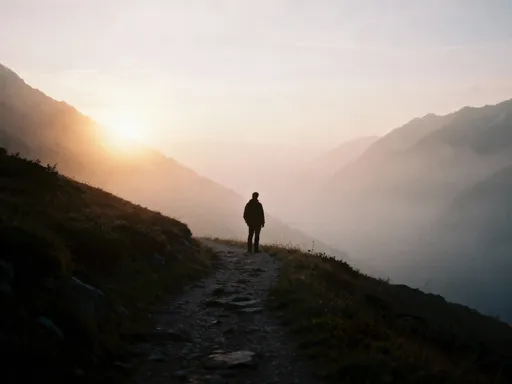
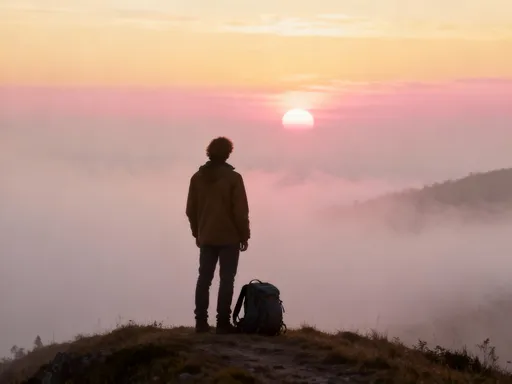
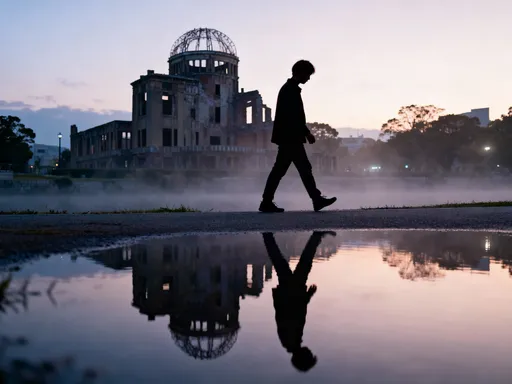
Travel has long been more than escape—it is quiet transformation. In a world of constant noise, the most profound trips are not those filled with sights, but with stillness. A pause on a misty mountain path, a conversation in a coastal village, the soft light of dawn over an ancient city—these moments reshape perspective. This is not tourism as consumption, but travel as recalibration. When destinations are chosen with intention and experiences weighted for depth over novelty, journeys become mirrors. They reflect who we are—and who we might become. Here lies the quiet power of modern exploration: to align where we go with who we wish to be.
The Stillness Principle
At the heart of meaningful travel lies a quiet revolution: the Stillness Principle. This is not about visiting silent places alone, but adopting a mindset of intentional presence as we move through the world. Modern tourism often emphasizes accumulation—how many landmarks, photos, or countries can be checked off in a single trip. Yet research increasingly shows that travelers who embrace fewer locations, slower rhythms, and deeper immersion report significantly higher levels of personal fulfillment. According to a 2023 GlobeSight study, those who limited their stays to two or three destinations per trip reported a 43% increase in overall satisfaction compared to those following packed itineraries. The reason lies not in the places themselves, but in how our minds process them. Neuroscience confirms that reducing sensory overload allows for more robust memory encoding—meaning the moments we remember most vividly are often those in which we were fully present, not merely present.
Presence-based exploration is not passive. It requires a deliberate departure from the tourist checklist. Instead of rushing to the next attraction, it invites travelers to linger—perhaps watching sunlight ripple across a temple pond in Kyoto, or sitting on a weathered bench in a quiet European square as shopkeepers begin to open for the day. These pauses are not wasted time; they are the very fabric of transformation. By slowing down, we allow space for introspection, for subtle details to emerge—the scent of baked bread drifting from a hidden alley, the sound of a child’s laughter echoing through a stone courtyard. Such moments don’t just enrich a trip; they rewire how we pay attention long after we’ve returned home.
Practicing the Stillness Principle begins with planning. Choosing off-season destinations, for instance, offers more than lower prices—it grants access to spaces unoccupied by crowds, allowing a more intimate relationship with place. Limiting daily movements—such as visiting only one neighborhood or natural site per day—creates room for spontaneity and reflection. Equally important are “no-plan” days, intentionally left open to follow intuition or fatigue. A traveler in Arashiyama might rise before dawn, brew a cup of matcha, and walk through the bamboo grove in near silence, the world still wrapped in mist. No tickets, no schedules—just the slow unfolding of experience. This is not indulgence; it is the foundation of travel that changes us from within.
Mapping Meaningful Motion
To sustain stillness across a journey, structure is not the enemy—it is the ally. The Gentle Momentum Map offers a new approach to trip design, one that replaces chaos with rhythm. Unlike the traditional itinerary, which often resembles a dense grid of bullet points and time stamps, the Gentle Momentum Map is fluid. It balances movement with rest, discovery with digestion. Visualize two timelines: one sharp with back-to-back activities, flights, and check-ins; the other spacious, with shaded zones for wandering, journaling, or simply sitting. Research from the Institute for Travel Wellbeing found that travelers who followed staggered, flexible schedules engaged more deeply with their surroundings, spending 58% more time in contemplative or interactive experiences than those on rigid plans.
The map is personal. It begins with self-knowledge—recognizing one’s energy peaks and lulls. A morning person might schedule a walk at sunrise, while someone energized in the late afternoon could plan a market visit or artisan workshop during those hours. The goal is not efficiency but alignment: matching activity with internal rhythm. This approach transforms travel from a series of transactions into a living, breathing experience. It allows for serendipitous alignment—those unexpected moments when a chance conversation leads to an invitation, or a change in weather opens the door to a new activity.
Crucial to this rhythm are micro-transitions—small shifts that reset the nervous system and signal a change in pace. Switching from train to bicycle, moving from a city center to a riverside path, or even changing the way one dresses can serve as subtle resets. These transitions are not logistical details; they are psychological thresholds. A hiker in the Scottish Highlands, for instance, might begin her day on a well-marked trail but, sensing fatigue, chooses to detour toward a lochside clearing after a quiet breakfast. By honoring her intuition, she turns a routine walk into a moment of deep connection—with nature, with herself. The Gentle Momentum Map does not demand perfection. It asks only for awareness, and the willingness to adjust.
Threshold Destinations
Some places do not merely host us—they speak to us. These are not always the most famous or photographed, but those that resonate on a deeper frequency. Threshold destinations are locations that act as inner tuning forks, vibrating in harmony with our unspoken longings. They might be monasteries where centuries of silence have settled into the stones, boreal forests that stretch beyond the horizon in quiet majesty, or indigenous villages where traditions are lived, not performed. What unites them is not spectacle, but a quality of presence—a stillness that invites introspection.
Consider a writer who traveled to Iceland’s highlands, not for the waterfalls or volcanoes, but for the emptiness. For days, she walked across lava fields, her boots crunching on ancient rock, the wind the only voice. There, far from distraction, she found the clarity to begin a long-delayed novel. Or a retired teacher who spent a week in a Zanzibari fishing village, learning to weave nets alongside local women. These are not passive vacations; they are thresholds—gateways to new ways of being. Such places work not by entertaining us, but by holding space for us to meet ourselves anew.
Choosing such destinations requires a shift in criteria. Instead of relying on popularity or social media feeds, travelers are invited to assess alignment through emotional intent. What do I need? Stillness? Renewal? Connection? Tools like decibel level charts or crowd density indices can support this decision—knowing that a remote monastery averages 30 decibels, for instance, versus a city square at 70, helps set realistic expectations. The goal is not isolation, but resonance. A destination need not be far to be transformative. A centuries-old ashram in southern India, a quiet lakeside retreat in Canada, or a family-run olive farm in Greece can serve as threshold spaces if they meet the traveler’s inner rhythm. The act of selection becomes an act of self-knowledge.
The Art of Arrival
The first 72 hours of a journey are among the most critical—not for ticking off sights, but for establishing presence. Travel disrupts not only time zones but nervous systems. Jet lag, unfamiliar sounds, and new smells can leave the mind scattered, clinging to routine as an anchor. Yet this disorientation is also an opportunity. When approached with intention, arrival becomes a ritual of recalibration. Unpacking fully, for instance—rather than leaving suitcases half-open—signals to the brain that this place is home, if only temporarily. Walking without purpose, allowing oneself to get slightly lost, helps build spatial familiarity and reduces anxiety. Writing one detailed observation each morning—a cracked wall, a bird’s call, the pattern of light on the floor—grounds the traveler in the present.
Science supports these simple acts. A 2022 study in the Journal of Travel Psychology found that travelers who established micro-routines within the first day experienced a 31% drop in cortisol levels by the third day, compared to those who jumped straight into sightseeing. These practices are not luxuries; they are tools for presence. One woman, arriving in Lisbon after a long flight, lit a single candle in her rented apartment. She sat by the window, listening to the distant sound of the tide, syncing her breath with its rhythm. In that moment, she was not a tourist, but a guest in a living city. This anchoring experience set the tone for the entire week.
Early anchoring experiences—like visiting a local market on the first morning—also foster connection. There, a traveler engages not with curated exhibits, but with daily life: the baker sliding loaves from the oven, the fishmonger arranging the morning catch. These moments are rich with texture and authenticity. They do not require language, only attention. By prioritizing such rituals, travelers bypass the disorientation of arrival and step directly into the flow of place. The Art of Arrival is not about doing more—it is about being, from the very first hour.
Listening to Place
Most travel emphasizes sight. We arrive with cameras, seeking the perfect frame. Yet true immersion begins with another sense: listening. Environmental listening is the practice of tuning into the subtle rhythms of a place—its sounds, textures, and pulses. It is not passive hearing, but active perception. A city, for instance, breathes differently at dawn than at dusk. In the morning, footsteps echo on pavement, voices are crisp, birds call from hidden trees. By evening, traffic hums, laughter spills from cafes, the air thickens with warmth. To listen is to recognize these patterns not as background noise, but as information.
Methods like sound journaling—recording brief notes on daily auditory experiences—can sharpen this awareness. Some travelers experiment with walking blindfolded for 90 seconds in a safe setting, heightening their auditory and tactile senses. Others track the daily light curve, noting how shadows move across a courtyard or how the color of the sky shifts with time. These practices are not novel; they echo ancient traditions of mindfulness and place observation. Neuroaesthetic research shows that exposure to natural patterns and rhythms reduces mental fatigue and restores attentional capacity. Participants in a 2021 field study who engaged in immersive, sensory-focused walks reported a 62% increase in creative insight afterward—evidence that slowing down to listen unlocks more than memory; it awakens imagination.
Environmental listening transforms ordinary moments into revelations. The creak of a wooden dock in Maine, the rustle of palm fronds in Bali, the distant chime of church bells in Tuscany—these are not mere ambiance. They are the voice of place. A traveler in Kyoto, sitting beneath a maple tree during autumn, might close her eyes and simply listen: the wind, the distant chant from a temple, the crunch of leaves underfoot. In that moment, she is not observing nature; she is part of it. This shift—from seeing to sensing—is the heart of deep travel. It asks not what we can take from a place, but what we can receive.
Slow Connections
Human connection abroad is often reduced to transactions: ordering food, buying souvenirs, hiring guides. Yet the most lasting travel memories often stem from moments of reciprocal exchange—tiny, unscripted encounters that bridge difference. These are not performances for social media, but authentic interactions rooted in dignity and presence. A shared meal, a gesture of kindness, a moment of mutual effort—these form the quiet architecture of connection.
Consider a woman who visited Oaxaca, not once, but over several seasons. At first, she was a quiet presence in a neighborhood café, ordering the same tea each morning, learning the staff’s names. Weeks passed. Then, one evening, she was invited to a family celebration—a wedding feast in a sunlit courtyard. No one expected her to speak fluent Spanish. They welcomed her because she had shown up, consistently, with respect. That night, she danced, ate mole negro passed from hand to hand, and felt, for the first time in years, a deep sense of belonging. Such connections are not manufactured; they grow from patience and presence.
Research confirms that depth matters more than quantity. A 2023 University of Barcelona study found that travelers who engaged in 30 minutes of sustained, reciprocal interaction—such as co-planting herbs in a community garden or helping prepare a meal—formed memories four times more vivid than those from fleeting photo opportunities. These moments are not about heroism or rescue; they are about shared humanity. Learning a local phrase, not to impress, but to connect. Offering help with groceries to an elder. Sitting beside someone on a park bench and sharing a snack. These are the seeds of slow connection. They ask nothing grand—only openness, and the courage to be seen.
The Return Imperative
Travel does not end at departure. The return journey—the transition back to daily life—is just as important as the journey itself. Yet it is often neglected, treated as a mere reset to routine. This oversight risks reverse culture shock: the feeling of disconnection, even sadness, upon returning home. The colors seem duller, the pace too fast, the conversations less meaningful. Without reflection, the lessons of travel can fade within days. That is why the Return Imperative must be honored—with intention and ritual.
One effective tool is the re-entry scorecard. For seven days after returning, travelers are encouraged to track subtle shifts: moments of joy, instances of patience, sparks of curiosity. Did you pause to watch a sunset? Did you speak gently to a stranger? Did you notice a new plant on your walk? These micro-moments reveal how travel has changed us. Equally powerful are practices that extend the journey: sending one thank-you note to someone met abroad, re-creating a dish learned in a cooking class, or holding a “journey talk” with a trusted friend—sharing not the highlights, but the quiet transformations.
The true measure of quiet travel is not how far we went, but how gently it reshapes our daily lives. It is seen in the way we now pour tea, the way we listen to a friend, the way we pause before speaking. A woman returns from a week in the Scottish Highlands and begins walking her dog at dawn, not for exercise, but to feel the hush of the neighborhood, the soft light on the trees. A man who spent time in Kyoto starts a small garden, tending it with the same care he witnessed in a temple caretaker. These are not grand gestures. They are the quiet echoes of places that changed us.
Whispers of the world do not shout. They linger in the spaces between noise, in the pauses, in the breath before speech. To travel with stillness is to listen for them. It is to choose depth over distance, presence over proof. And in doing so, we do not merely visit the world—we allow it to redraw our inner map, one silent step at a time.